Kettle Springs clown attacks
Clown in a CornfieldThe Kettle Springs clown attacks were the violent culmination of a conspiracy that sought to preserve the town by targeting its young people. The attacks left Kettle Springs with a decimated population and survivors carrying lasting trauma, but the conspirators did not achieve the future they intended: the young people persisted, the plot was exposed, and the town began to recover in public view.
Conspiracy and Unintended Outcome
The attacks were connected to a plan devised by Arthur Hill and George Dunne. In the aftermath, Quinn Maybrook understood the contradiction at its center: the plan had worked in the sense that its authors and their twelve known conspirators believed they had saved Kettle Springs, but events had overturned their meaning of success. The town’s population had been decimated, yet the young people the conspirators had tried to eliminate remained. Even if Cole Hill, Quinn, and Ruston Vance had died in the refinery, Quinn believed, the clowns would not have won. The intended purge had failed to extinguish the generation it targeted.
That conclusion was not an abstract comfort for Quinn. In the immediate aftermath, she persuaded Glenn Maybrook that they should stay in Kettle Springs rather than leave the violence behind. She regarded the town as their home and felt that retreat would let the attackers win. Her decision turned survival into a claim on the place itself: remaining meant refusing to surrender the future to the people who had spilled blood in its name.
Investigation and Exposure
The conspiracy did not remain hidden after the attacks. Shortly after the Federal Bureau of Investigation arrived, investigators questioned and arrested people connected to it. The evidence included Arthur Hill’s phone records, emails from the sheriff’s office, and GPS data from phones that had registered at Kettle Springs Improvement Society meetings. Those records made it difficult for accomplices to conceal their involvement, although many were already dead.
The method of exposure carried a sharp irony. The clowns had been poor at covering their digital traces, and Quinn recognized that the phones they despised had helped bring them down. She was certain that the conspirators would have been caught even if they had survived and succeeded in killing her and her friends. Their failure to master technology meant that the plot’s reach could be reconstructed through the very devices their anti-technology outlook rejected.
Survivors and the Return to School
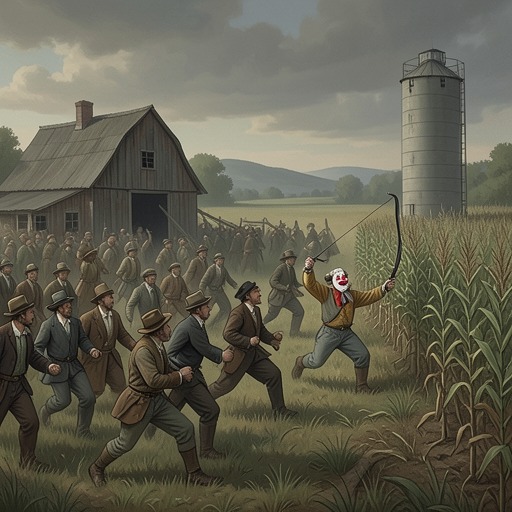
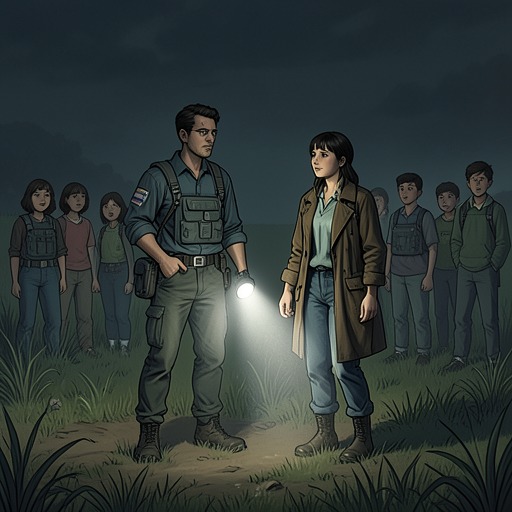
Kettle Springs High School resumed classes at the beginning of December. Around twenty students returning to school had been at the party in Tillerson B-field on the night of the attacks. Most had survived being locked in the barn and escaped into the corn before the clown reinforcements arrived. Their return marked a concrete continuation of the student body the attackers had tried to destroy.
Another fifteen or so students had simply not gone to the party. Quinn treated their absence as a small, grimly comic argument for staying home on weekends: sweatpants and bad television had, in this instance, kept them away from danger. The contrast between those who had been trapped and those who had stayed away does not diminish the attacks; it shows how survival in Kettle Springs depended partly on circumstances as ordinary as whether a student went out that night.
Survival did not mean an immediate return to normal. Quinn’s hands sometimes shook, and she kept the lights on throughout the house. Her dreams had already been terrible since her mother’s death, but she had now lived through another terrible event, one that could not leave her unchanged. The attacks persisted in the survivors’ habits and fears even as school reopened and the town’s daily life resumed.
Recovery, Attention, and the Town’s Future
In the days and weeks after the attacks, Kettle Springs drew an influx of outsiders: television news crews, state and federal law enforcement, and several true-crime documentary teams. Their presence brought practical consequences for a town whose population had been decimated. Visitors needed places to stay and eat, producing an economic boost that lasted for months. Some local residents bristled at the attention, while most appreciated the newcomers and the business they brought.
Quinn declined several offers to discuss her experiences on camera, but other survivors chose to speak. One production team arranged an exclusive joint interview with Cole Hill and Ruston Vance, and had already presold a planned three-part miniseries to Netflix. The town’s catastrophe thus became both a subject of public fascination and a source of renewed activity; Quinn’s refusal to perform her experience for the cameras existed alongside other survivors’ willingness to tell theirs.
The town also began removing the clowns’ visible presence. Businesses quickly took down Frendo-themed window displays, while demand for white paint and power washers reached an all-time high as residents scrubbed clown imagery from murals and signage. These acts of cleanup were modest beside the violence, but they made recovery visible in the places people passed every day. The attacks had left Kettle Springs altered; they had not made the town’s public identity permanently belong to the clowns. Its young people returned, its residents stayed, and the perpetrators’ effort to decide the town’s future ended in exposure rather than victory.